Solar panels
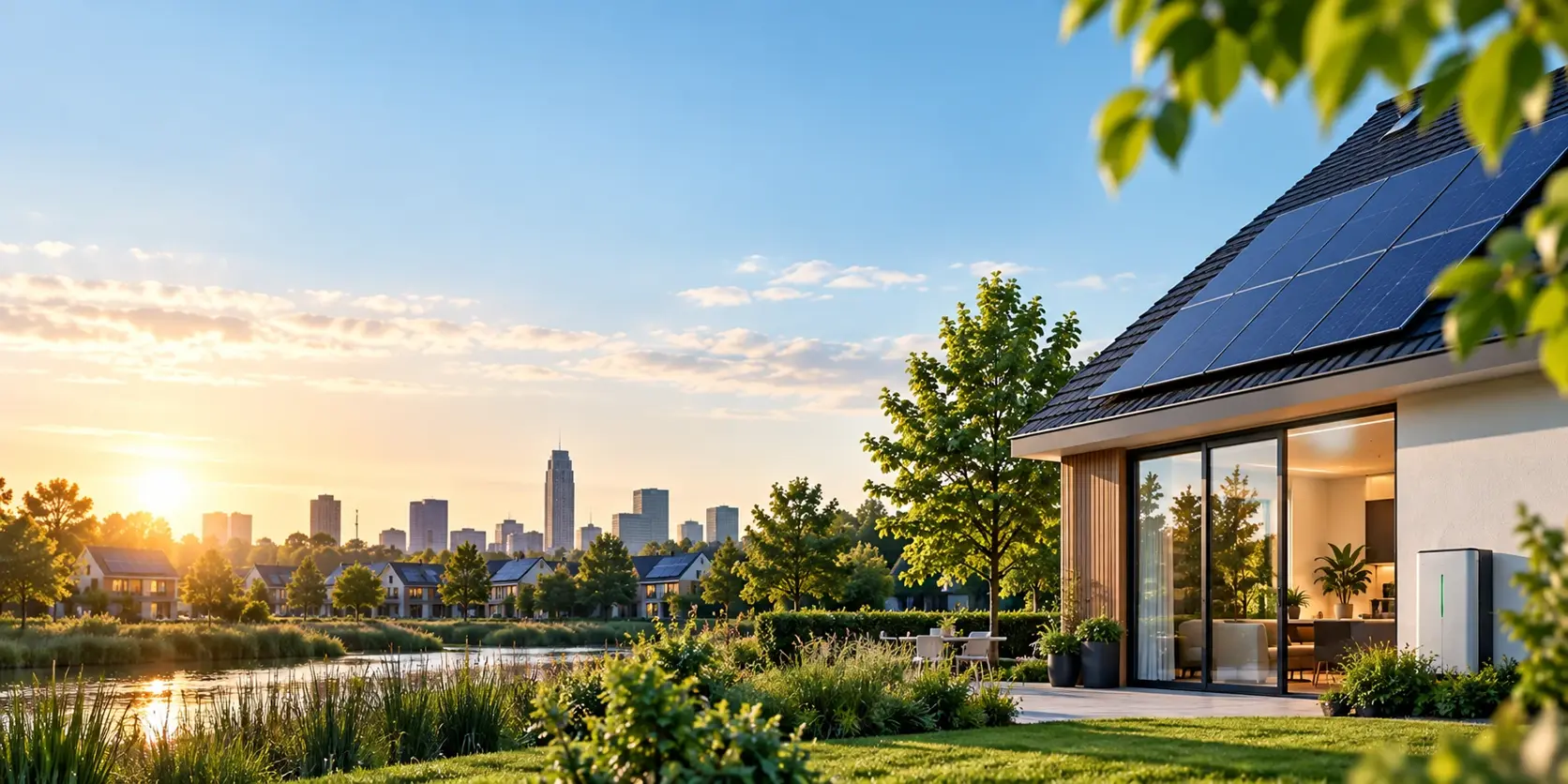
Solar panels for more grip on your energy
Generate your own renewable electricity and depend less on the grid. ECOMIX helps you find out which solution suits your home, your consumption and your plans.
- Free and without obligation
- Personal advice
- Matched to your home
Why choose solar panels?
Solar panels can pay off now and later. These are the reasons homeowners give most often.
Generate your own electricity
Use the power of the sun to generate your own electricity.
Grip on energy costs
Solar power you use yourself is power you do not have to buy.
Less dependent
Less exposed to rising energy prices and to the grid.
A more sustainable home
Generate renewable electricity and contribute to a cleaner energy supply.
How do solar panels work?
Solar panels turn sunlight into electricity. An inverter converts it into power your home can use.
Capturing sunlight
The panels capture sunlight and convert it into direct current.
Converting it to usable power
The inverter converts the direct current into alternating current for your home.
Using it straight away
Appliances in the house use the electricity as it is generated.
Exporting the rest
What you do not use straight away goes to the electricity grid.
The numbers refer to the steps alongside.
From generating to using it smartly
What happens to your solar power? It comes down to using as much of it yourself as you can.
Direct use
The electricity you generate is used straight away by appliances and lighting in your home.
Exporting
Any surplus electricity goes to the electricity grid.
Smarter use
With a home battery or smart control you use more of your own electricity.
Using your own power matters more and more
With the end of net metering (salderingsregeling) and the rise of feed-in costs, using your own solar power yourself becomes more valuable.
Read more about self-consumption
Net metering, feed-in costs and what comes next
The rules around solar energy are changing. We help you understand them.
Net metering
The net metering scheme (salderingsregeling) ends on 1 januari 2027. What does that mean for you?
Feed-in costs
More and more suppliers charge costs for the electricity you export.
Feed-in compensation
What you receive for exported electricity, and how that differs from the costs.
Good to know
Solar power you use yourself is power you do not have to buy, after 2027 as well. How worthwhile panels are for you depends on your roof, your consumption and the cost.
Combining solar panels with a home battery
Store your solar power and use it when you need it. With a home battery you get more out of what you generate and depend less on exporting.
- More self-consumption
- Less exporting
- Ready for 2027
- Easy to combine
Who are solar panels interesting for?
Solar panels can suit many homeowners, for example if:
You own your home
You own the property and decide about your own roof.
You have a suitable roof
Your roof works in terms of orientation, space and condition.
You use an average amount or more
Because of a family, a heat pump or an electric car, for example.
You want a future-proof home
You want a more sustainable home and to be ready for what comes.
How does the process work?
Four steps to advice that fits.
- 1
Stap 1: Home assessment
Answer a few questions about your home.
- 2
Stap 2: Situation and options
We look at your home and your consumption.
- 3
Stap 3: Personal advice
You receive clear advice that suits your home.
- 4
Stap 4: Installation
Want to go ahead? A selected partner takes care of the installation.
Frequently asked questions
Are solar panels still worthwhile after 2027?
Solar power you use yourself is power you do not have to buy — that stays true after net metering (salderingsregeling) ends. For the electricity you do export you will then receive a feed-in compensation instead of netting it off. How worthwhile panels are for you depends on your roof, your consumption and the cost.
How many solar panels do I need?
That depends on your consumption, the space and orientation of your roof and your plans, such as an electric car or a heat pump. So we do not give a standard number: we look at your situation.
Do solar panels work without a home battery?
Yes. Solar power you do not use straight away goes to the electricity grid. A home battery is an addition that lets you use more of your own power — not a requirement.
What happens to the electricity I export?
It goes to the electricity grid. Up to and including 31 december 2026 you can net it off against the electricity you take from the grid; after that you receive a feed-in compensation from your energy supplier. Some suppliers also charge feed-in costs (terugleverkosten).
Do I need a permit for solar panels?
Solar panels on a roof often do not need a permit, but there are exceptions — for listed buildings or in a protected townscape, for example. Check this with the Omgevingsloket or your municipality.
More about solar panels
Curious what solar panels could mean for your home?
Take the free home assessment and receive personal advice about the options for your home.
- Free and without obligation
- Quick insight
- Personal advice