
Smart home battery
Store your own energy and use it when you need it

The problem
Solar generation and consumption do not always line up
Solar panels deliver most in the middle of the day, while many households use most of their electricity in the morning and the evening. That gap is becoming more important.
Surplus during the day
On sunny moments you often generate more than you are using at that time.
Exporting
That surplus goes to the grid and is expected to earn less once net metering ends.
Feed-in costs
Many suppliers charge costs for the electricity you export.
Use after sunset
In the evening, when you often use most, you take electricity from the grid.
The solution
Why a home battery?
A home battery stores electricity generated during the day so you can use it later. What that means for you depends on your situation.
Use more of your own energy
Use your solar power even when the sun is not shining.
Export less
Keep more of your surplus instead of exporting it straight away.
Respond to energy prices
With smart energy management and a suitable contract, the battery can charge at favourable moments.
Ready for what is coming
Prepared for the end of net metering on 1 January 2027.
How does a home battery work?
From sunshine to smart use
An example of how energy can flow in and around your home.
Without a home battery
During the day you use part of your solar power directly. What you are not using at that moment flows to the grid. In the evening you take electricity from the grid.
- Solar power
- Electricity from the grid
With a home battery
The surplus is stored in the battery first. Later, in the evening for example, you use that electricity yourself. Once the battery is full, the remaining surplus goes to the grid.
- Solar power
- From the battery
- Electricity from the grid
Smart energy management
The system takes your generation, your consumption, the state of the battery and — where available — energy prices into account. That is how it decides when the battery charges, discharges or exports.
- Solar power
- From the battery
- Electricity from the grid
- Smart control
An illustrative example. How much solar power you use directly, store or export differs per home and depends on your consumption, your solar panels and the battery capacity, among other things.
Smart energy management
A battery that thinks along
Smart energy management weighs up different signals and decides when the battery charges, discharges or exports. What is possible depends on the system and the configuration.
- Solar generationHow much your panels are generating right now
- Use in the homeWhat your home is asking for at this moment
- Battery levelHow full the battery is
- Energy priceOn a dynamic contract: the current price
Smart energy management
Weighs up these signals and controls the battery
- ChargingStoring surplus or cheap electricity
- DischargingUsing stored electricity yourself
- ExportingOnly when that makes sense
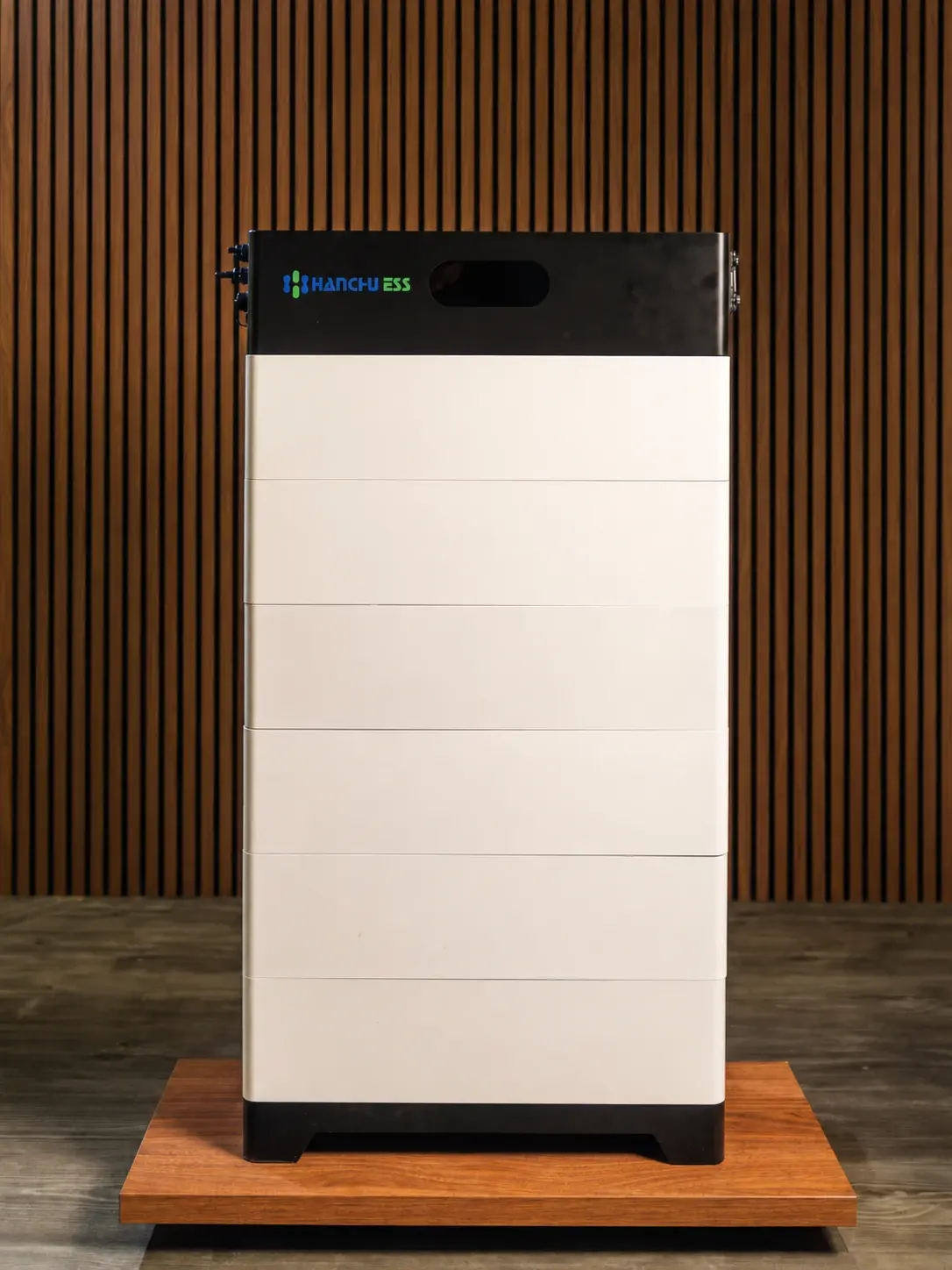
- Matched to your home
- Smart energy management
- Store solar power for later

Hanchu ESS home battery
- Capacity and configuration are matched to your situation
- Can work with smart energy management, depending on the configuration
- Can be combined with existing or new solar panels
- Personal advice first, a quotation afterwards
- Installation by a selected execution partner
We will add specifications, capacities, warranty terms and availability as soon as they are officially confirmed. In an advice conversation we discuss what applies to your home.
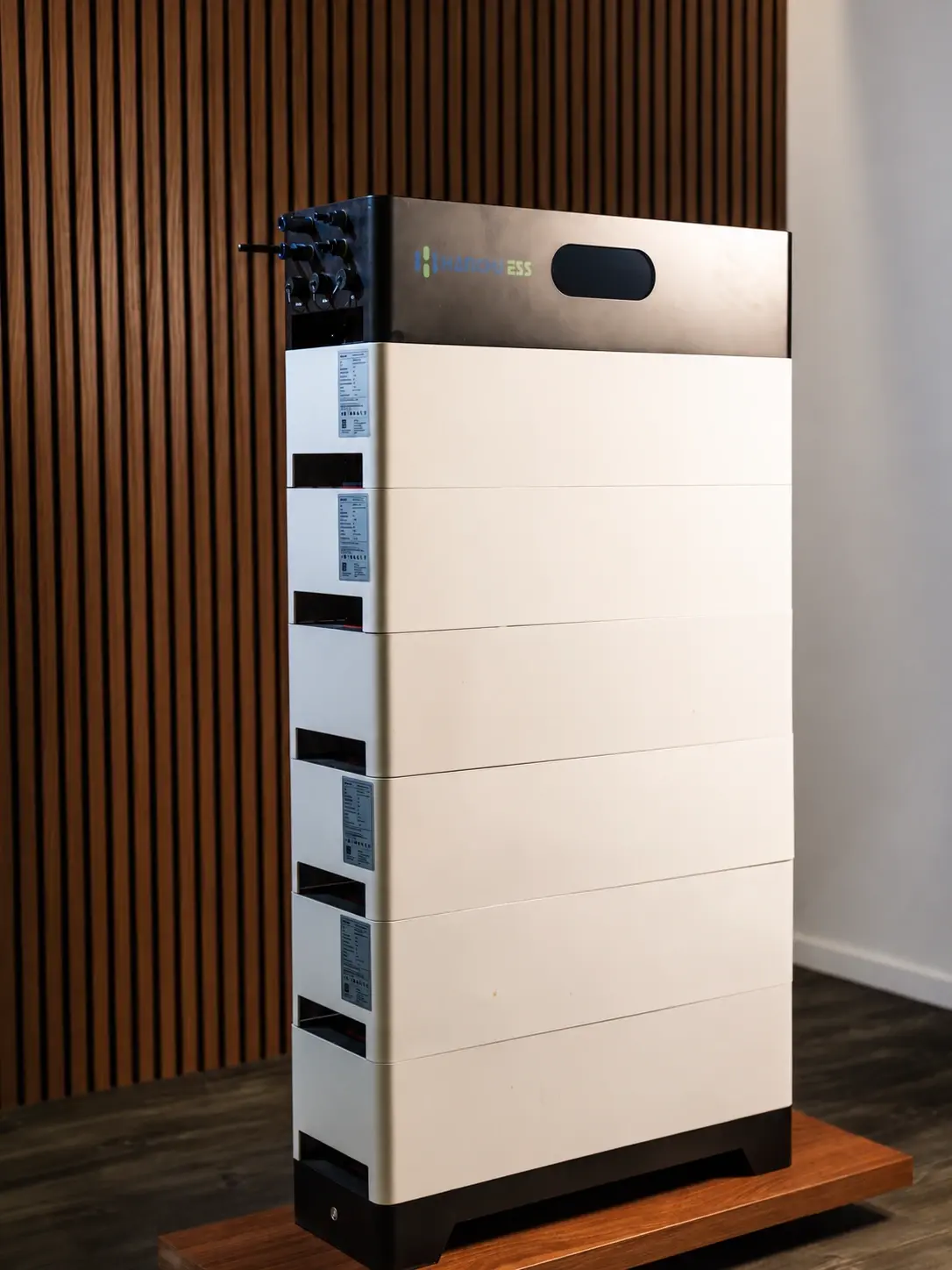
Built from modules
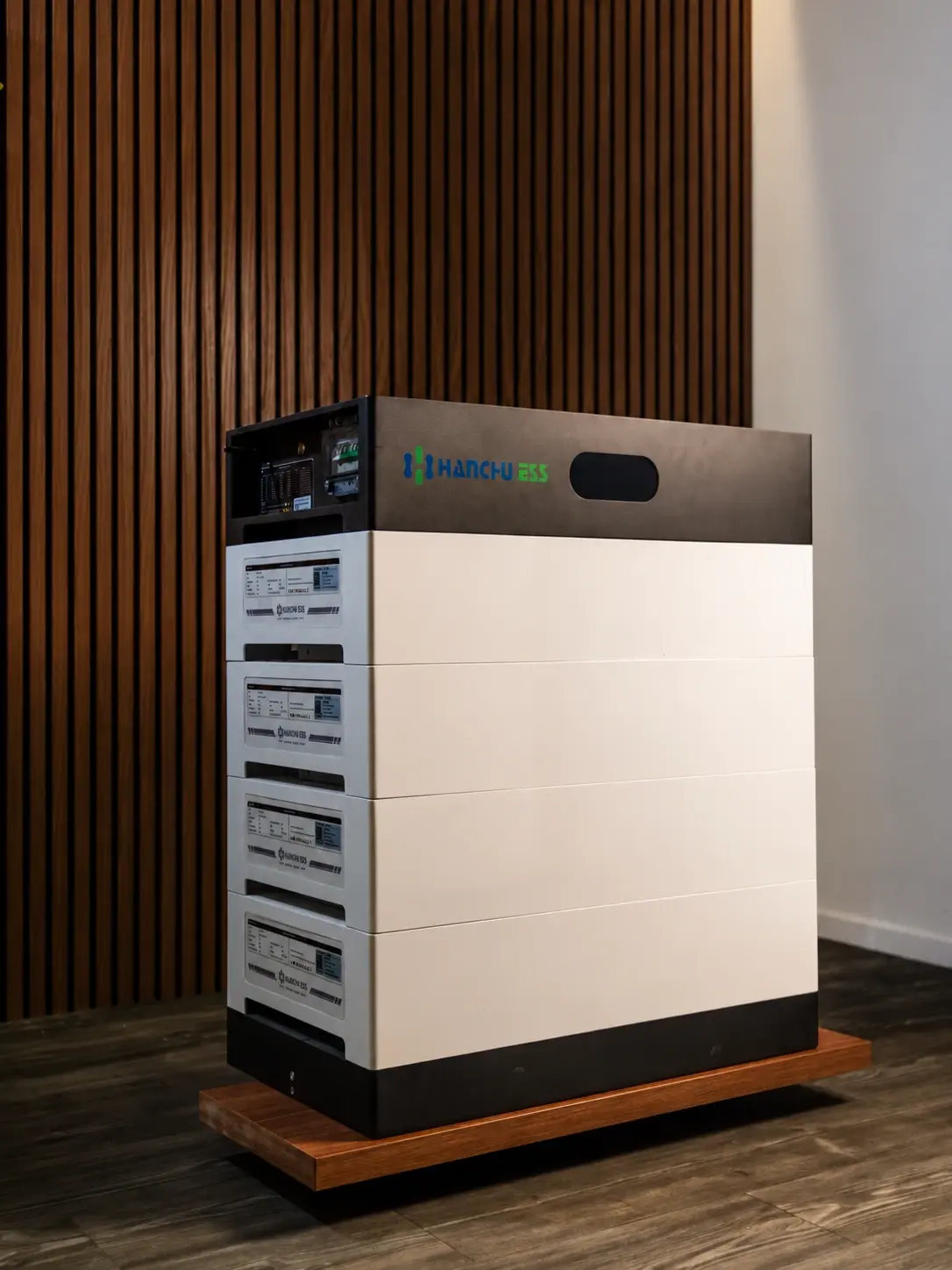
Back
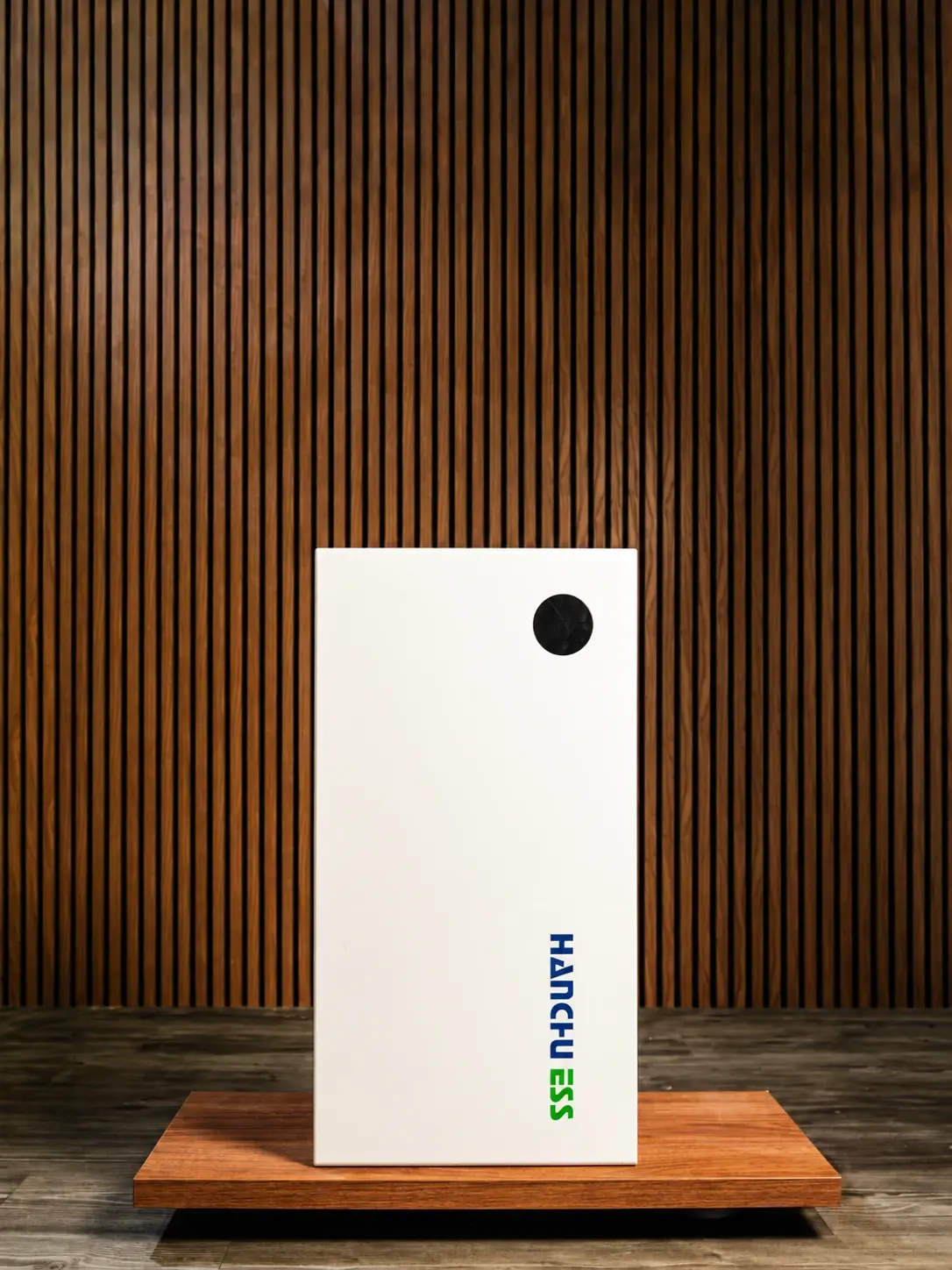
A single module
Configuration
Which capacity suits you?
There is no capacity that suits everyone. We look at your situation to work out which configuration makes sense.
Your consumption
How much electricity you use per year, and when.
Your generation and surplus
How much solar power you have left over on an average day.
Your connection
A single-phase or three-phase connection partly determines what fits.
Your future plans
An electric car or a heat pump changes your consumption.
Your energy contract
On a dynamic contract, prices play a bigger role.
Who is a home battery interesting for?
A home battery can be worth considering in the following situations.
- You have solar panels
- You are charged feed-in costs
- You want to use more of your own electricity
- You have a dynamic energy contract
- You have an electric car or a heat pump
- You want to be ready for what is coming
Installation, safety and warranty
Clear arrangements in advance, so you know where you stand.
Installation
Carried out by a selected execution partner, which is responsible for the work.
Safety
Placement and connection are assessed in advance for your situation.
Warranty
Warranty conditions come from the manufacturer and the installer, and are shared with the quotation.
What does the process look like?
- 1
Stap 1: Home assessment
You answer a few questions about your home and your energy use.
- 2
Stap 2: Assessment
We look at which solutions could suit your situation.
- 3
Stap 3: Personal advice
We talk through the options and what they mean for you.
- 4
Stap 4: Quotation and installation
A selected partner provides the quotation and carries out the installation.
Frequently asked questions
Is a home battery worthwhile for every home?
No. Your consumption pattern, how much solar power you have left over, your grid connection and your energy contract together determine whether a battery makes sense. That is exactly what we look at with you.
Which capacity do I need?
There is no capacity that suits everyone. We look at your annual consumption, when you use electricity, how much you export and your plans — an electric car or a heat pump, for example.
Does a home battery work during a power cut?
Not automatically. Backup power requires a system that explicitly supports that function. We tell you in advance whether that applies to the configuration being discussed.
Can I combine a battery with existing solar panels?
In many cases yes. Which parts are needed depends on your existing installation and inverter. That is assessed before any quotation.
What does a home battery cost?
That depends on the configuration and the installation. You receive a quotation from a selected execution partner, so the price matches your actual situation rather than an average.

Still have questions?
Get in touch. We are happy to think along with you about what is possible for your home.
- info@ecommix.nl
- Maandag t/m vrijdag, 10:00 – 19:00 uur
Curious what suits your home?
Answer a few questions about your home and your energy use. We will help you see what is possible.
- No obligation
- Takes a few minutes
- Personal advice