
In this article
What is the difference?
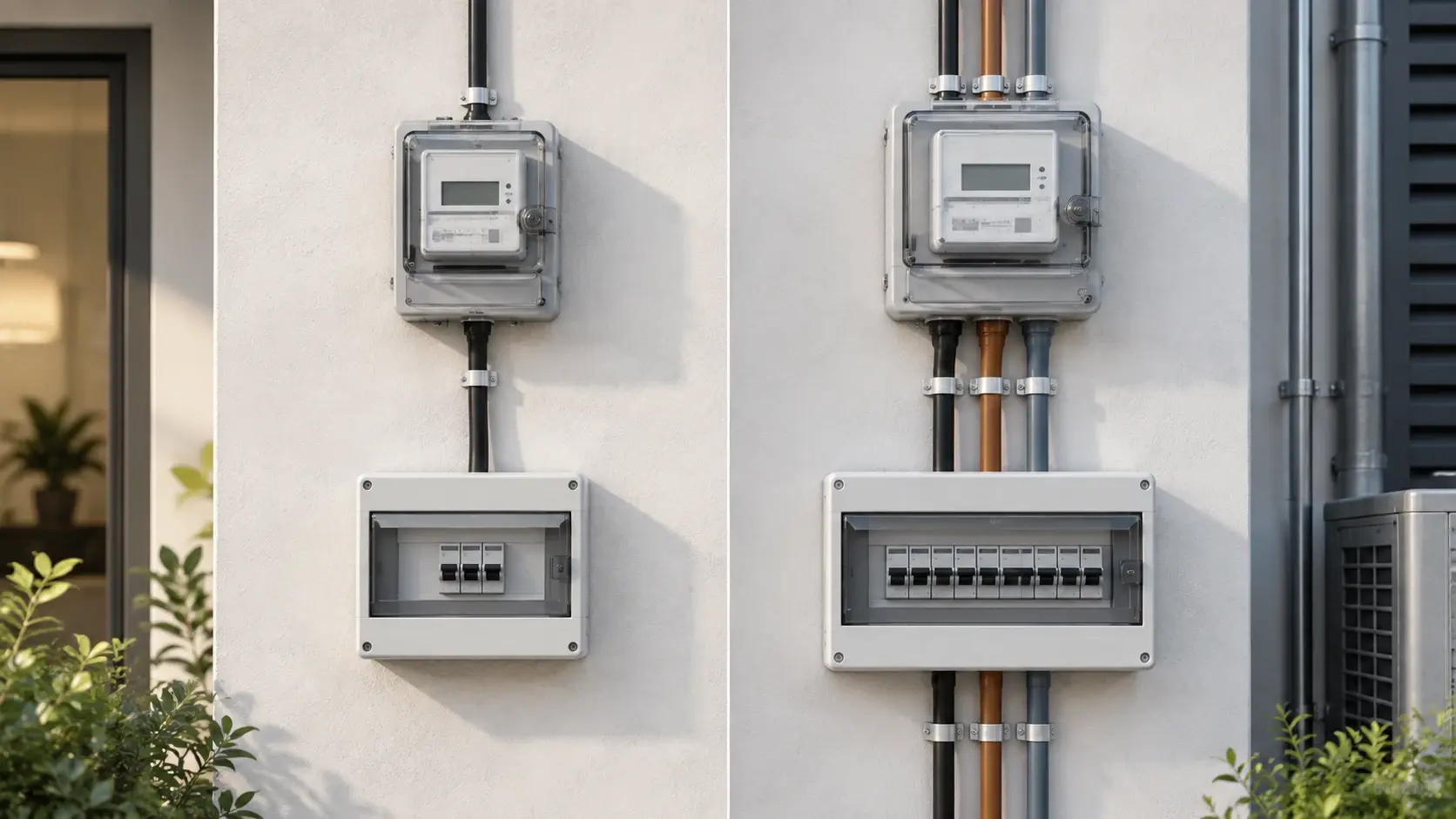
With a single-phase connection the electricity comes in over one phase; with a three-phase connection over three. A common single-phase connection of 1 x 35A can deliver roughly 8 kW; a common three-phase connection of 3 x 25A roughly 17 kW. The exact connection value differs per home.
How do you recognise your connection?
- Look in the meter cupboard at the main switch or the main fuse: there is often a marking such as “1 x 35A” or “3 x 25A”.
- Preferably check your grid operator’s online account. An energy bill sometimes shows a tariff category rather than the actual phase configuration.
- If you are unsure, ask your grid operator or a certified installer.
Why does it matter?
Whether an installation fits a single-phase or three-phase connection depends on its power and the type of system. Some home batteries, charging points and heat pumps come in different power ratings and phase versions. Upgrading the connection is sometimes an option; you request that through your grid operator. Because of congestion on the electricity grid, a new or heavier connection can take longer in some regions. So have someone check first whether upgrading is really necessary in your situation.
Frequently asked questions
Do I need to know my connection type for the home assessment?
No. You can simply choose 'I don't know' in the home assessment. We will look at it together afterwards.
Sources
For rules and policy we refer to official and independent sources.
Last checked on September 20, 2026. Rules and rates can change; this information is general and not personal advice.