
In this article
How does a dynamic contract work?
On a fixed contract the price per kWh is set for a period. On a variable contract the supplier can adjust the price periodically. On a dynamic contract the price follows the energy market: for electricity it differs per hour or per quarter of an hour.
Prices are often lower at moments with plenty of supply, in the middle of a sunny day for example, and higher when demand is high. Sometimes the wholesale price is even negative. That does not automatically mean your total consumer price is negative: suppliers can charge mark-ups or fixed costs, and taxes still apply. You need a smart meter for a dynamic or flexible rate.
Responding to prices
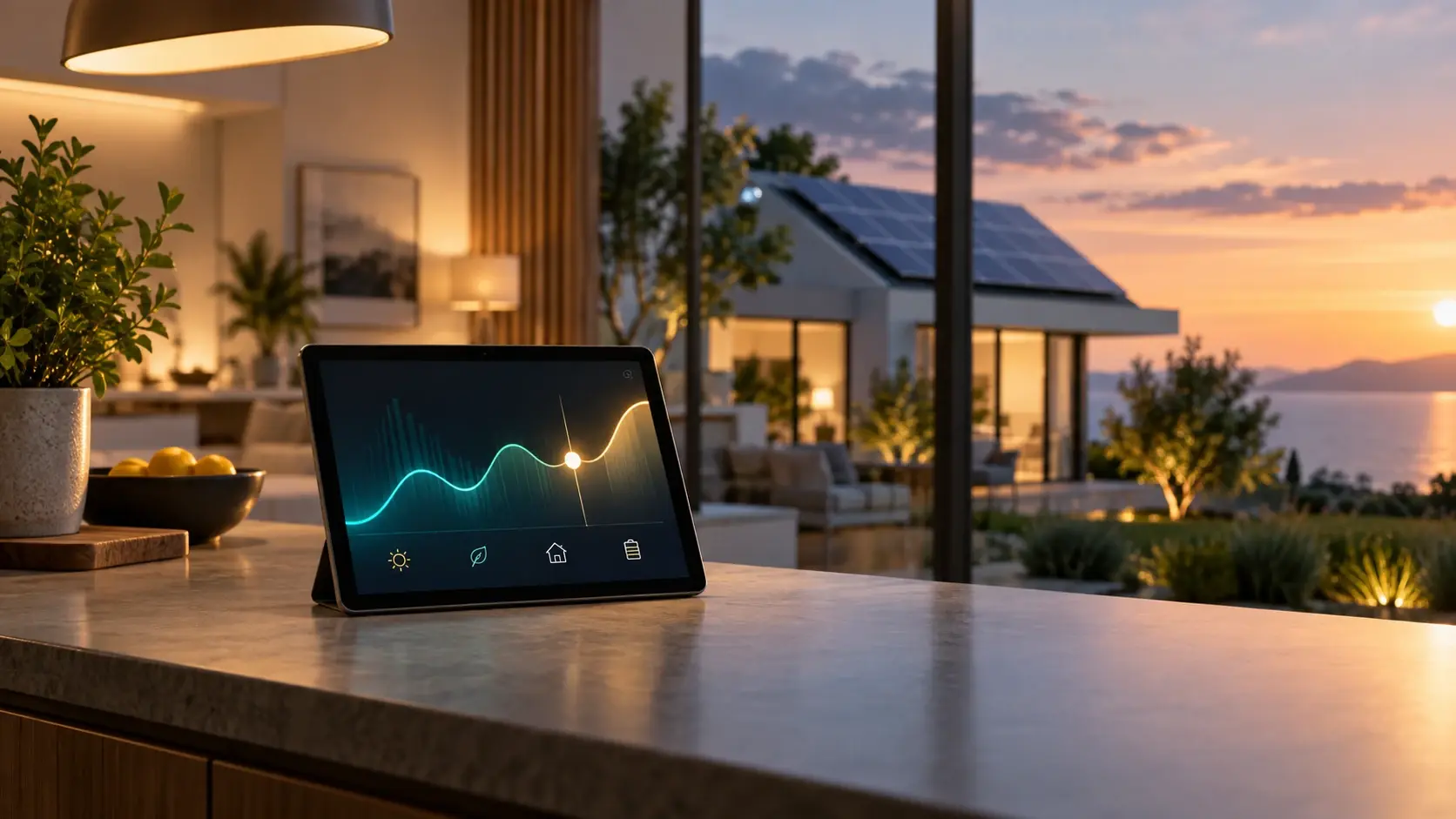
A dynamic contract can bring an advantage if you are able to shift part of your consumption. You can do that by hand, but also automatically: a smartly controlled home battery can charge when electricity is cheap and discharge when it is expensive. The eventual result depends on price differences, efficiency, any costs, and how the system is controlled.
- Solar generationHow much your panels are generating right now
- Use in the homeWhat your home is asking for at this moment
- Battery levelHow full the battery is
- Energy priceOn a dynamic contract: the current price
Smart energy management
Weighs up these signals and controls the battery
- ChargingStoring surplus or cheap electricity
- DischargingUsing stored electricity yourself
- ExportingOnly when that makes sense
What does a dynamic contract mean with solar panels?
If you have solar panels, do not look only at the price you pay for the electricity you take. On a dynamic contract the compensation for exported electricity can also change per hour or quarter of an hour. At sunny moments that payment can be low or even negative. So check the feed-in compensation, any feed-in costs and the rest of the contract conditions as well.
Who might it suit?
- households who can consciously plan their consumption around cheaper moments;
- households with smart appliances that can automatically shift charging, heating or other consumption;
- people who accept price swings and want to follow their consumption and rates.
A dynamic contract is not suitable for everyone. If you mainly want certainty about the supply rate per kWh and as little exposure to price peaks as possible, a fixed contract may suit you better.
Frequently asked questions
Is a dynamic contract always cheaper?
No. You pay the market price of the moment, and that can be high too. It can work out well if you are able to shift your use to moments with low prices, but that is not guaranteed.
Sources
For rules and policy we refer to official and independent sources.
- Milieu Centraal: Energiecontracten: welke zijn er? (opens in a new window)
- Milieu Centraal: Thuisbatterij: zonne-energie opslaan (opens in a new window)
Last checked on September 20, 2026. Rules and rates can change; this information is general and not personal advice.